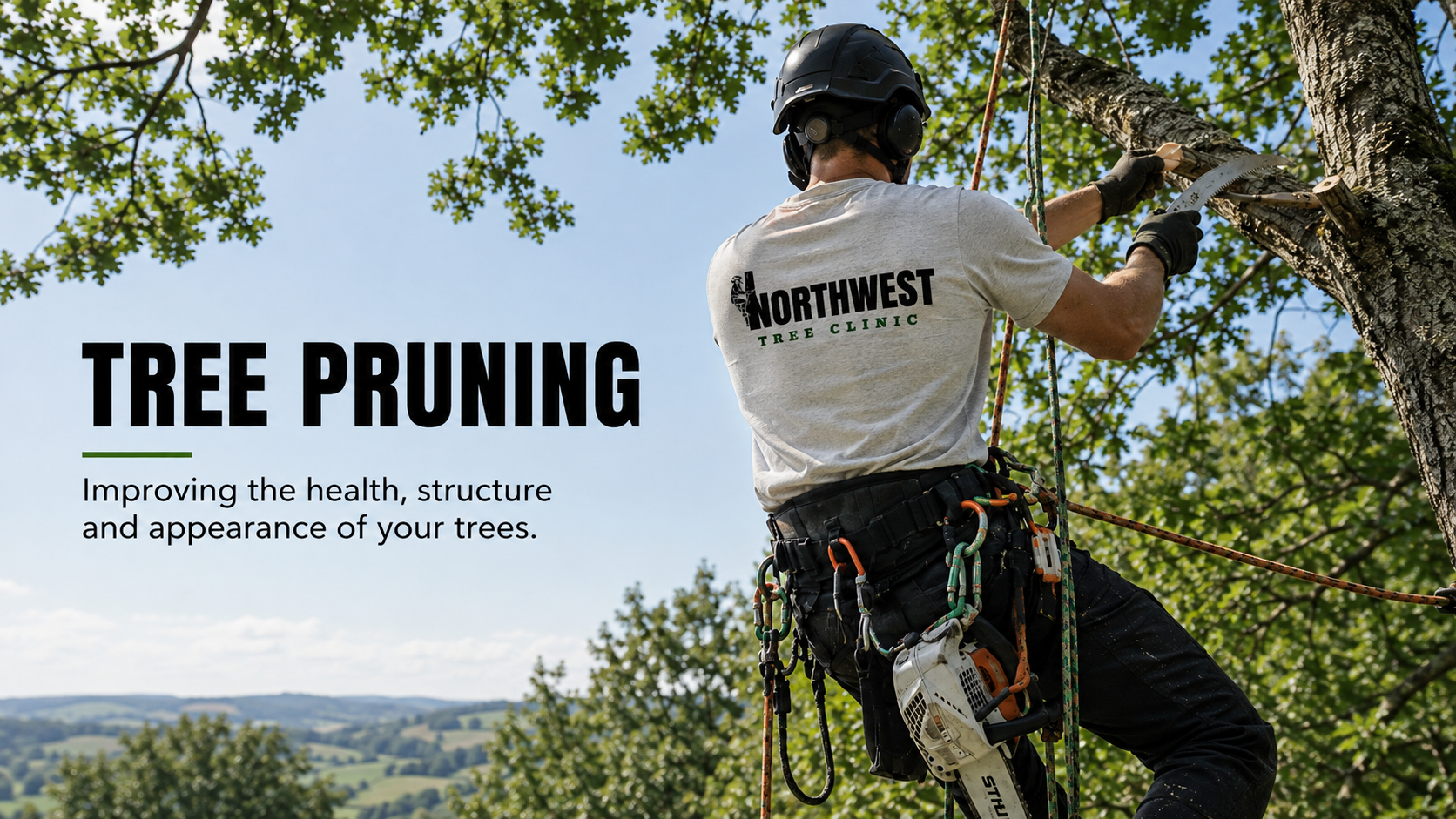
Regular tree pruning can improve safety, manage growth and support the long-term health and appearance of a tree. However, unnecessary or poorly timed cutting can cause lasting damage. Any work should be based on the tree’s species, condition and location.
Signs a Tree May Need Pruning
A professional assessment may be needed if you notice:
- Dead, damaged or hanging branches
- Branches growing towards buildings, roads or overhead services
- Excessive shading or reduced clearance
- Crossing or rubbing branches
- An unbalanced or overextended canopy
- Damage following storms or strong winds
These signs do not always mean major work is required. In some cases, carefully removing selected branches or carrying out a light crown reduction may be enough.
Common Types of Tree Pruning
Crown Reduction
Crown reduction decreases the overall height or spread of the canopy while retaining the tree’s natural shape.
It may be recommended when a tree has outgrown its surroundings, is creating excessive overhang or requires more controlled growth.
Crown Thinning
Crown thinning removes selected branches from within the canopy to reduce density.
This can improve light penetration and airflow without significantly changing the overall height or spread of the tree.
Crown Lifting
Crown lifting removes lower branches to increase clearance above roads, paths, gardens, buildings or access areas.
The amount of lifting required will depend on the site and the surrounding environment.
Deadwood Removal
Deadwood removal involves cutting out dead, damaged or weakened branches.
This can reduce the risk of falling branches and improve the overall safety and appearance of the tree.
When Is the Best Time to Prune a Tree?
The best time to prune depends on the tree species, its condition and the type of work required.
Some trees respond better to pruning during particular seasons. Urgent safety work may need to be completed regardless of the time of year.
A qualified tree surgeon can inspect the tree and recommend the most suitable timing and method.
Why Professional Tree Pruning Matters
Poor pruning can weaken a tree, create unsuitable regrowth and leave it more vulnerable to decay or disease.
Professional tree work should be carefully planned and completed using suitable equipment and current arboricultural best practice.
NorthWest Tree Clinic carries out tree pruning in line with BS3998 while considering site safety, surrounding property and long-term tree health.
Check Whether Permission Is Required
Some trees may be protected by a Tree Preservation Order or located within a conservation area.
Before carrying out significant work, it is important to check whether permission or formal notice is required.
NorthWest Tree Clinic can provide guidance following an initial tree and site assessment.
Professional Tree Pruning Across Lancashire
NorthWest Tree Clinic provides crown reductions, crown thinning, crown lifting, deadwood removal and general tree maintenance across Lancashire and the surrounding areas.
For professional advice or a quotation, contact office@northwest-tree-clinic.com.